Friday, 14 September 2012

Thursday, 16 August 2012
Introduction to my Project
For our Unit 3 body of work we were allowed to chose our own projects to work upon, whether this was am artists style we admire, a particular campaign or charity we would wish to work for or just a concern that we feel passionate about. I chose to work on the world of beauty and the extent people go for it. I mainly gained an interest for the world of beauty when I went to an exhibition to see the work of Zed Nelson who did a project on the global obsession with beauty and youth. Also with personally feeling like I am a more 'natural' person I find the world of plastic surgery, lyposuction and botox rather too extreme and no matter how bad i felt I personally would never result to the stuff. I even find the concept of dying my hair a bit extreme as i would like to stay as natural as possible, therefore by being this sort of person the world of beauty has always fascinated me and I have always been intruiged to why do people go to such great extents for it?
When I started looking into this project my main inspiration was the photographer Zed Nelson to which a particular project he worked on that I favoured for was called ‘Love Me’. His ‘Love Me’ project was based around reflecting on the cultural and commercial forces that drive the global obsession with youth and beauty; he took images of cosmetic surgeons, beauty queens across the world and beauty operations. Some of my other inspiration for this project would be Douglas Alves and Helen Lyon. IO chose Helen Lyon as her work evolves around the view of the woman, she created a modelling piece of a very thin model with the caption "no cigarrette, no tits, no talent" which to me shows the harshness of the beauty industry, i want to look into her work to gain inspiration through how women are percieved in society and behind the emotional falls that women have to fight through for beauty. With the work of Douglas Alves however it is not what message his work is trying to give, but more his style of work Douglasd Alves has an illustrative feel to his work which makes me think along the lines of advertisement and camplaigns, i want to look into douglas Alves because i want to be inspired by his technique and style of his work.with my project I want to explore how the commercial forces drive the beauty obsession today compared to the past and what did people in history thought was beautiful and what did they use to become beautiful (e.g corsets) as well as looking at how the difference in cultures can effect peoples visions on what beauty is but I don’t want to just look into the difference between Western and Eastern culture I would like to go into depth about particular cultures and possibly link this in with the research of the history of beauty and look at if there was any difference between different cultures in the past as well as different cultures in the present and possibly future. I want to explore different media being able to combine both photography, art work and photoshopped together to experiment with the field of beauty as well to look into the world of video.
When I started looking into this project my main inspiration was the photographer Zed Nelson to which a particular project he worked on that I favoured for was called ‘Love Me’. His ‘Love Me’ project was based around reflecting on the cultural and commercial forces that drive the global obsession with youth and beauty; he took images of cosmetic surgeons, beauty queens across the world and beauty operations. Some of my other inspiration for this project would be Douglas Alves and Helen Lyon. IO chose Helen Lyon as her work evolves around the view of the woman, she created a modelling piece of a very thin model with the caption "no cigarrette, no tits, no talent" which to me shows the harshness of the beauty industry, i want to look into her work to gain inspiration through how women are percieved in society and behind the emotional falls that women have to fight through for beauty. With the work of Douglas Alves however it is not what message his work is trying to give, but more his style of work Douglasd Alves has an illustrative feel to his work which makes me think along the lines of advertisement and camplaigns, i want to look into douglas Alves because i want to be inspired by his technique and style of his work.with my project I want to explore how the commercial forces drive the beauty obsession today compared to the past and what did people in history thought was beautiful and what did they use to become beautiful (e.g corsets) as well as looking at how the difference in cultures can effect peoples visions on what beauty is but I don’t want to just look into the difference between Western and Eastern culture I would like to go into depth about particular cultures and possibly link this in with the research of the history of beauty and look at if there was any difference between different cultures in the past as well as different cultures in the present and possibly future. I want to explore different media being able to combine both photography, art work and photoshopped together to experiment with the field of beauty as well to look into the world of video.
Wednesday, 8 August 2012
Douglas Alves

 Another beautiful mixed media illustrator/graphic
designer, Brazilian born and Los Angeles based Douglas Alves have some stunning images in
his portfolio, a 26 years old self-taught graphic designer who worked already
for some prestigious company like Coca-cola, Mtv, Microsoft and Honda amongst
others… I like a lot the fact that he’s showcasing his work in large
format – You should definitely check his nice flash website: www.nacionale.net and his Balance.
Another beautiful mixed media illustrator/graphic
designer, Brazilian born and Los Angeles based Douglas Alves have some stunning images in
his portfolio, a 26 years old self-taught graphic designer who worked already
for some prestigious company like Coca-cola, Mtv, Microsoft and Honda amongst
others… I like a lot the fact that he’s showcasing his work in large
format – You should definitely check his nice flash website: www.nacionale.net and his Balance.
“I was born in I Sao (squiggly line over a) Paulo, Brazil and im
26years old. As a self –taught i started my career in 2000 working in agencies
and interactive shops . After 5 years i decided to become a freelancer and i
started to do illustrations. I’ve had a pleasure to with great brand names and
some of these”
Thursday, 12 July 2012
Brief
A new company called "Be Natural" wants to change the face of beauty in the commercial industry. The company has done a wide range of research into the damage that can be caused by people who go to drastic extents for beauty and 'Be Natural' would like to give the public the choice to be beautiful and age gracefully without the damages and side effects that can be caused by beauty regimes in the market today. 'Be Natural' is a company that provides beauty in the most natural way possible, by using anti-wrinkle creams with vitamin C and other natural Minerals it allows for the buyer to gain the beauty they want and disserve at the same time as giving their body and skin the special treatement it needs to help it stay young and beautiful as 'Be Natural' products aim to revive and renue the skin and the organs to make their customers feel younger, healthier and more alive than ever before.
What 'Be Natural' wants you to do is create a series of advertisements for 'Be Natural' products to which will enable for them to be promoted on the commercial market as well as an attempt to change the face of beauty forever. The advertisements may include posters, billboards, packaging, labelling ect.
What 'Be Natural' wants you to do is create a series of advertisements for 'Be Natural' products to which will enable for them to be promoted on the commercial market as well as an attempt to change the face of beauty forever. The advertisements may include posters, billboards, packaging, labelling ect.
Wednesday, 11 July 2012
The Baltic/Laing Art Gallery Trip
On Monday 2nd July the art department went on a trip to the Baltic Mill as well as The Laing Art Gallery in Newcastle to enhance our research skills as well as gain some knowledge on new artists that we could be interested in for our Unit 3 project. We first went to the Baltic Mill and looked round at the different artists that they were showcasing.
Tuesday, 10 July 2012
A History of beauty through the ages
Renaissance Period
 In the 15th century, upper-class ladies of northern Europe painfully
plucked their hairline to make their foreheads seem higher, and
scraped their hair back under an elaborate headdress. In the warmer
climate of Italy, women displayed their hair in plaits and under
low, jeweled turbans or caps. Blond hair was considered to be a
sign of beauty and high class. As a result, both men and women attempted
to turn their hair blond by using bleach, saffron or onion skin
dye, or, in the case of Italian women, by sitting for hours in a
crownless hat in the sun.
In the 15th century, upper-class ladies of northern Europe painfully
plucked their hairline to make their foreheads seem higher, and
scraped their hair back under an elaborate headdress. In the warmer
climate of Italy, women displayed their hair in plaits and under
low, jeweled turbans or caps. Blond hair was considered to be a
sign of beauty and high class. As a result, both men and women attempted
to turn their hair blond by using bleach, saffron or onion skin
dye, or, in the case of Italian women, by sitting for hours in a
crownless hat in the sun.Elizabethan Period
 In the 16th century, after Francis I of France accidentally burned
his hair with a torch, men began to wear short hair and grew short
beards and mustaches. Of course, Queen Elizabeth was instrumental
in setting the female trends for this era (thus the name). Society
women copied her naturally pale complexion and red hair, using white
powder in great abundance, along with red wigs. The most successful
means for re-creating Elizabeth's pallor, unfortunately, was ceruse,
or white lead, which was later discovered to be poisonous. Inspired
by Italian women, the Elizabethan lady would also give a healthy
glow to her cheeks by using lead-based rouge colored with dye. She'd
color in her eyebrows, lips and even blue veins with alabaster pencils.
For the final touch, she'd apply a thin glaze of egg-white paste
to hold it all together.
In the 16th century, after Francis I of France accidentally burned
his hair with a torch, men began to wear short hair and grew short
beards and mustaches. Of course, Queen Elizabeth was instrumental
in setting the female trends for this era (thus the name). Society
women copied her naturally pale complexion and red hair, using white
powder in great abundance, along with red wigs. The most successful
means for re-creating Elizabeth's pallor, unfortunately, was ceruse,
or white lead, which was later discovered to be poisonous. Inspired
by Italian women, the Elizabethan lady would also give a healthy
glow to her cheeks by using lead-based rouge colored with dye. She'd
color in her eyebrows, lips and even blue veins with alabaster pencils.
For the final touch, she'd apply a thin glaze of egg-white paste
to hold it all together.18th Century
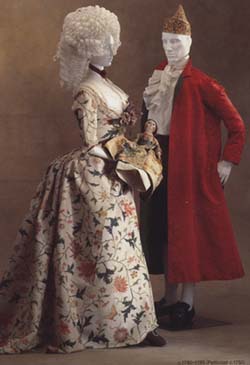
Victorian
 The puritanical Victorian era advocated a modest, natural beauty,
restrained and without makeup. Middle- and upper-class women used
cosmetics less, but did not abandon them completely. Beyond face
powders, more audacious colored makeup was reserved for prostitutes
and actresses, who wore it only on stage. Society placed great emphasis
on hygiene and health, and many women's magazines warned against
the toxic qualities of lead-based industrial cosmetics. Beginning
in the 1840s, women's heads were sleek and demure, the hair oiled
and smoothed down over the temples with long sausage curls at the
side and later with a heavy knot of curls or plaits in back. In
the 19th century men tended to keep their hair relatively short,
sometimes curled and dressed with macassar oil. Most men wore some
variety of mustache, sideburns or beard.
The puritanical Victorian era advocated a modest, natural beauty,
restrained and without makeup. Middle- and upper-class women used
cosmetics less, but did not abandon them completely. Beyond face
powders, more audacious colored makeup was reserved for prostitutes
and actresses, who wore it only on stage. Society placed great emphasis
on hygiene and health, and many women's magazines warned against
the toxic qualities of lead-based industrial cosmetics. Beginning
in the 1840s, women's heads were sleek and demure, the hair oiled
and smoothed down over the temples with long sausage curls at the
side and later with a heavy knot of curls or plaits in back. In
the 19th century men tended to keep their hair relatively short,
sometimes curled and dressed with macassar oil. Most men wore some
variety of mustache, sideburns or beard. The 1920's
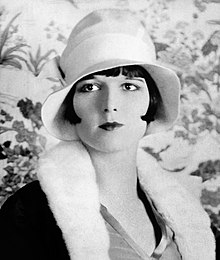 During the "Roaring Twenties," societal trends reacted against the puritanical
Victorian standards of beauty. Popular new short "bobbed," waved or shingled
hairstyles symbolized the growing freedom of women. The impact of cinema was
felt for the first time, as women increasingly took their beauty cues from film
stars such as Louise Brooks and Clara Bow. The heavy use of makeup also returned
to fashion in this era. Generally, white women applied pale powder and cream
rouge circles to the cheeks, plucked their eyebrows and penciled in thin arches,
and painted their lips very red, emphasizing the cupid's bow of the upper lip.
Fashion-conscious white men wore their hair parted in or near the center and
slicked back with brilliantine — an oily, perfumed substance that added shine
and kept hair in place. This look was popularized by screen idols such as
Rudolph Valentino. Some African-American males adopted the "conk," a hairstyle
popularized by entertainer Cab Calloway. The conk was an attempt to straighten
the hair and was accomplished by enduring a truly painstaking process of
"relaxing" with a solution dominated by lye.
During the "Roaring Twenties," societal trends reacted against the puritanical
Victorian standards of beauty. Popular new short "bobbed," waved or shingled
hairstyles symbolized the growing freedom of women. The impact of cinema was
felt for the first time, as women increasingly took their beauty cues from film
stars such as Louise Brooks and Clara Bow. The heavy use of makeup also returned
to fashion in this era. Generally, white women applied pale powder and cream
rouge circles to the cheeks, plucked their eyebrows and penciled in thin arches,
and painted their lips very red, emphasizing the cupid's bow of the upper lip.
Fashion-conscious white men wore their hair parted in or near the center and
slicked back with brilliantine — an oily, perfumed substance that added shine
and kept hair in place. This look was popularized by screen idols such as
Rudolph Valentino. Some African-American males adopted the "conk," a hairstyle
popularized by entertainer Cab Calloway. The conk was an attempt to straighten
the hair and was accomplished by enduring a truly painstaking process of
"relaxing" with a solution dominated by lye.The 1940's

Throughout the 1930s and 1940s, Hollywood starlets continued to set the trends
in women's fashion. Longer, more feminine hairstyles became popular again, and
women immediately copied Bette Davis' curls, Betty Grable's topknot with
ringlets, and Rita Hayworth's gleaming waves. Veronica Lake created a sensation
by wearing a lock of hair that covered one eye. The hairstyle that most
symbolized the era, however, was parted on the side, with soft curls falling
over the shoulder. Also, for the first time, tanned skin (for both men and
women) began to be perceived as a symbol of high class — again showing the
influence of screen stars on standards of beauty. Men continued to wear their
hair short and often slicked back with oil, and skinny, trimmed mustaches were
popularized by stars such as Errol Flynn.
The 1950's

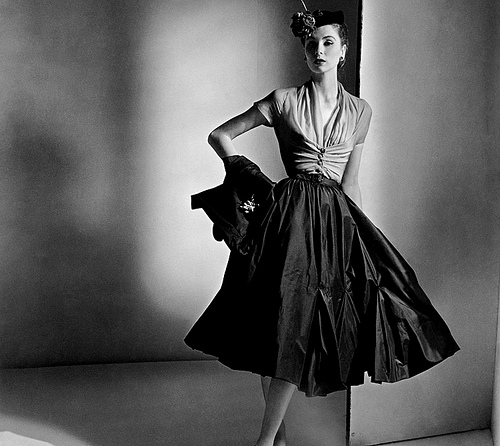 In the uncertain times following the end of World War II, tradition and
conservative values made a big comeback. The glamorous woman at home, able to
attend to all domestic chores without a hair out of place, became a popular
image. As a result, many women spent an inordinate amount of time living up to
the '50s ideal of beauty. The "doe eye," created with shadow on the lids,
eyebrow pencil, mascara and heavy eyeliner; along with a pale complexion and
intensely colored lips, became fashionable. Women's hair suffered even greater
abuse. It was teased, styled, sculpted and sprayed at the salon every week into
a helmet of perfectly formed curls, waves and bouffants. Hip white men wore
their hair in a D.A. (short for Duck's Ass). Formed by combing the hair back on
the side of the head and holding it in place with hair grease, the hairstyle was
created by Philadelphia barber Joe Cirella in 1940 and took off when it was worn
by television, movie and music stars such as James Dean and Elvis Presley. The
D.A. was usually coupled with long, thick sideburns — making their first
appearance on men's faces since the 19th century — and a high-crowned poof of
hair brushed straight back off the forehead called the pompadour.
In the uncertain times following the end of World War II, tradition and
conservative values made a big comeback. The glamorous woman at home, able to
attend to all domestic chores without a hair out of place, became a popular
image. As a result, many women spent an inordinate amount of time living up to
the '50s ideal of beauty. The "doe eye," created with shadow on the lids,
eyebrow pencil, mascara and heavy eyeliner; along with a pale complexion and
intensely colored lips, became fashionable. Women's hair suffered even greater
abuse. It was teased, styled, sculpted and sprayed at the salon every week into
a helmet of perfectly formed curls, waves and bouffants. Hip white men wore
their hair in a D.A. (short for Duck's Ass). Formed by combing the hair back on
the side of the head and holding it in place with hair grease, the hairstyle was
created by Philadelphia barber Joe Cirella in 1940 and took off when it was worn
by television, movie and music stars such as James Dean and Elvis Presley. The
D.A. was usually coupled with long, thick sideburns — making their first
appearance on men's faces since the 19th century — and a high-crowned poof of
hair brushed straight back off the forehead called the pompadour.The 1960's


 In the 1960s women were once again moving out of the domestic sphere and into
the workplace, pursuing careers as well as an education. As a result, in the
early to mid-1960s women reacted against the time-consuming, complex hairstyles
of the '50s and opted for more practical short styles (often variations of the
1920s bob), or long, straight hair. There was only one makeup look throughout
the 1960s: dark eyes paired with pale lips (or, by the late '60s, no makeup at
all). Popular culture, especially rock 'n' roll, gained ascendancy in generating
standards of fashion and beauty. When the Beatles appeared on the Ed Sullivan
Show in 1964, their "mop tops" created a revolution in men's hairstyles — making
long hair fashionable for the first time since the 18th century. Social
movements such as Black Power and the anti-Vietnam War campaign also helped
shape the conception of beauty in the '60s. Many African-Americans rejected
white-influenced styles such as the conk, and adopted the Afro as a sign of
black pride. The influence of psychedelics and the hippie movement advocated a
natural, wild look for men and women and a complete rejection of cosmetics.
In the 1960s women were once again moving out of the domestic sphere and into
the workplace, pursuing careers as well as an education. As a result, in the
early to mid-1960s women reacted against the time-consuming, complex hairstyles
of the '50s and opted for more practical short styles (often variations of the
1920s bob), or long, straight hair. There was only one makeup look throughout
the 1960s: dark eyes paired with pale lips (or, by the late '60s, no makeup at
all). Popular culture, especially rock 'n' roll, gained ascendancy in generating
standards of fashion and beauty. When the Beatles appeared on the Ed Sullivan
Show in 1964, their "mop tops" created a revolution in men's hairstyles — making
long hair fashionable for the first time since the 18th century. Social
movements such as Black Power and the anti-Vietnam War campaign also helped
shape the conception of beauty in the '60s. Many African-Americans rejected
white-influenced styles such as the conk, and adopted the Afro as a sign of
black pride. The influence of psychedelics and the hippie movement advocated a
natural, wild look for men and women and a complete rejection of cosmetics.The 1970's

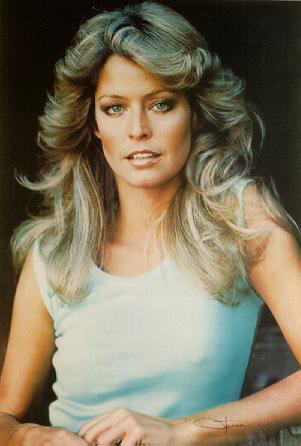 The social revolution spawned in the 1960s took root in the '70s, and the
standards of beauty reflected this upheaval. In fact, hair became the symbol of
the era in more ways than one, evolving into perhaps the most powerful means of
projecting an image or making a statement. For most of the decade, men and women
of all ethnicities wore their hair long, natural and above all free. Farrah
Fawcett's loose mane of freely falling curls, bronzed skin and glossy lips
created a sensation in 1976, as did Olympic figure skater Dorothy Hamill's
short-and-sassy wedge cut. Men adapted Farrah's "wingback" style into the
center-parted, "feathered" hairstyles worn by teen idols such as Leif Garret and
the Bee Gees. The Afro hairstyle remained popular and was also adopted by many
white men and women, though a closer-cropped version, such as that worn by
Muhammad Ali, was becoming fashionable. Toward the end of the decade the punk
movement arose in opposition to the hippie-influenced values of the era. Punks
created a deliberately shocking, provocative look that included spiked hairdos
dyed bright fluorescent colors, shaved and tattooed scalps, facial piercings and
spectacular makeup.
The social revolution spawned in the 1960s took root in the '70s, and the
standards of beauty reflected this upheaval. In fact, hair became the symbol of
the era in more ways than one, evolving into perhaps the most powerful means of
projecting an image or making a statement. For most of the decade, men and women
of all ethnicities wore their hair long, natural and above all free. Farrah
Fawcett's loose mane of freely falling curls, bronzed skin and glossy lips
created a sensation in 1976, as did Olympic figure skater Dorothy Hamill's
short-and-sassy wedge cut. Men adapted Farrah's "wingback" style into the
center-parted, "feathered" hairstyles worn by teen idols such as Leif Garret and
the Bee Gees. The Afro hairstyle remained popular and was also adopted by many
white men and women, though a closer-cropped version, such as that worn by
Muhammad Ali, was becoming fashionable. Toward the end of the decade the punk
movement arose in opposition to the hippie-influenced values of the era. Punks
created a deliberately shocking, provocative look that included spiked hairdos
dyed bright fluorescent colors, shaved and tattooed scalps, facial piercings and
spectacular makeup.The 1980's

 In the 1980s the "age of excess" was easily translated into hairstyles, in
general — the bigger, the better. Pop stars such as Madonna and Cyndi Lauper
popularized a style that included heavy makeup with vibrant neon colors and
intentionally messed-up and off-colored hair. Michael Jackson sported the "jheri
curl," a sparkling wet-looking, heavily processed version of the Afro. Decidedly
less audacious middle-class white teen-age boys adapted the punk-influenced
spiked hairstyle, which sometimes included a small braid at the back of the neck
(the "rat tail"). Androgyny also made a stunning impact in the '80s, from Sinead
O'Connor's shaved head to heavy metal "hair bands" with their makeup and
explosion of long, dyed hair. In opposition to these trends, a neoconservative
"preppy" look was also in, popularizing traditional short hairstyles for men and
women.
In the 1980s the "age of excess" was easily translated into hairstyles, in
general — the bigger, the better. Pop stars such as Madonna and Cyndi Lauper
popularized a style that included heavy makeup with vibrant neon colors and
intentionally messed-up and off-colored hair. Michael Jackson sported the "jheri
curl," a sparkling wet-looking, heavily processed version of the Afro. Decidedly
less audacious middle-class white teen-age boys adapted the punk-influenced
spiked hairstyle, which sometimes included a small braid at the back of the neck
(the "rat tail"). Androgyny also made a stunning impact in the '80s, from Sinead
O'Connor's shaved head to heavy metal "hair bands" with their makeup and
explosion of long, dyed hair. In opposition to these trends, a neoconservative
"preppy" look was also in, popularizing traditional short hairstyles for men and
women.The 1990's
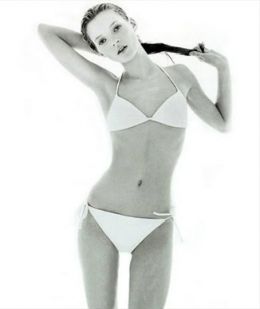
 In the 1990s standards of beauty were
incredibly diverse and constantly changing. Model Kate Moss created a disturbing
standard of extreme thinness, sometimes referred to as "heroin chic" from the
strung-out, emaciated appearance of the face and body. The "grunge" movement in
rock music popularized an unkempt, natural style in opposition to the heavily
artificial looks of the '80s. Long, matted and unstyled hair characterized the
grunge look. Tongue, eyebrow and nose piercings (for both men and women) also
came into vogue in the '90s and even crossed into the "mainstream" of youth
culture. Michael Jordan made shaving the head a popular "hairstyle" for men of
all races. Jennifer Aniston of the sitcom Friends created a brief hairstyle fad
with her modern version of the '60s shag. The "Rachel" cut was sleeker, with
longer layers and face-framing highlights.
In the 1990s standards of beauty were
incredibly diverse and constantly changing. Model Kate Moss created a disturbing
standard of extreme thinness, sometimes referred to as "heroin chic" from the
strung-out, emaciated appearance of the face and body. The "grunge" movement in
rock music popularized an unkempt, natural style in opposition to the heavily
artificial looks of the '80s. Long, matted and unstyled hair characterized the
grunge look. Tongue, eyebrow and nose piercings (for both men and women) also
came into vogue in the '90s and even crossed into the "mainstream" of youth
culture. Michael Jordan made shaving the head a popular "hairstyle" for men of
all races. Jennifer Aniston of the sitcom Friends created a brief hairstyle fad
with her modern version of the '60s shag. The "Rachel" cut was sleeker, with
longer layers and face-framing highlights. Tuesday, 3 July 2012
Dada movement/ Dadaism
 My short explanation of the dada movement is that they were artist that were not artists/ and creating art that was not art. The where the 'rebels' of the art word as they wanted to turn art on its head and poke fun at the old 'traditional' art.
Dada was the artistic movement that was born in Europe during the time of World War 1, because of the war many artists, writers and intellectuals - notably of French and German nationality - found themselves congregating in the refuge that Zurich offered them (In Switzerland). Far from feeling relief from the respective escapes, they were driven by the rage that their modern European society would allow for the war to happen. Due to this rage, they under-took the artistic protesting we call Dadaism today.
Gathering together in a loosely-knit group, these artists, writers and intellectuals used any public forum they could find to (metaphorically) spit, poke fun at and rebel against nationalism, ration-ism and any other -ism they could find which they felt could of contributed to a senseless war (if i was to think of any -isms today i could rebel against i would probably pick racism, sexism and agism).
Subscribe to:
Posts (Atom)